In the fields outside Charków, spring arrives quietly.
Grass returns first. Then farmers. Then, sometimes, explosions.
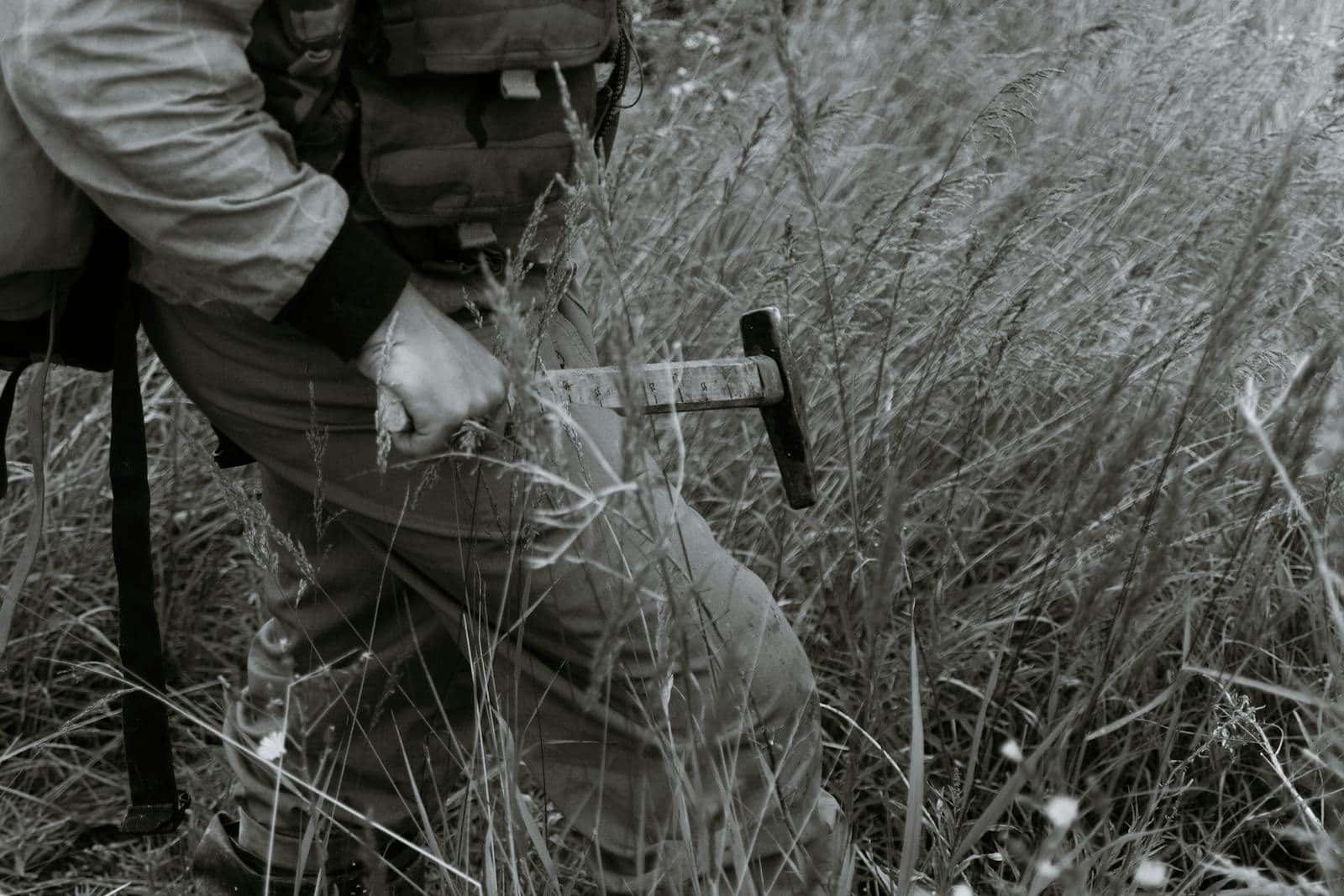
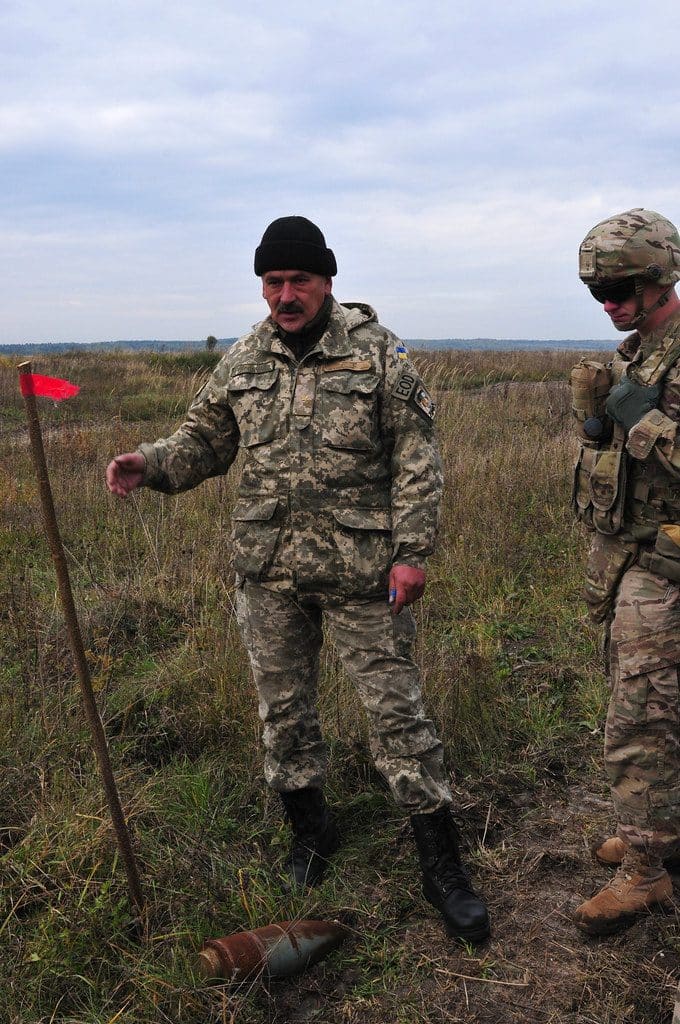
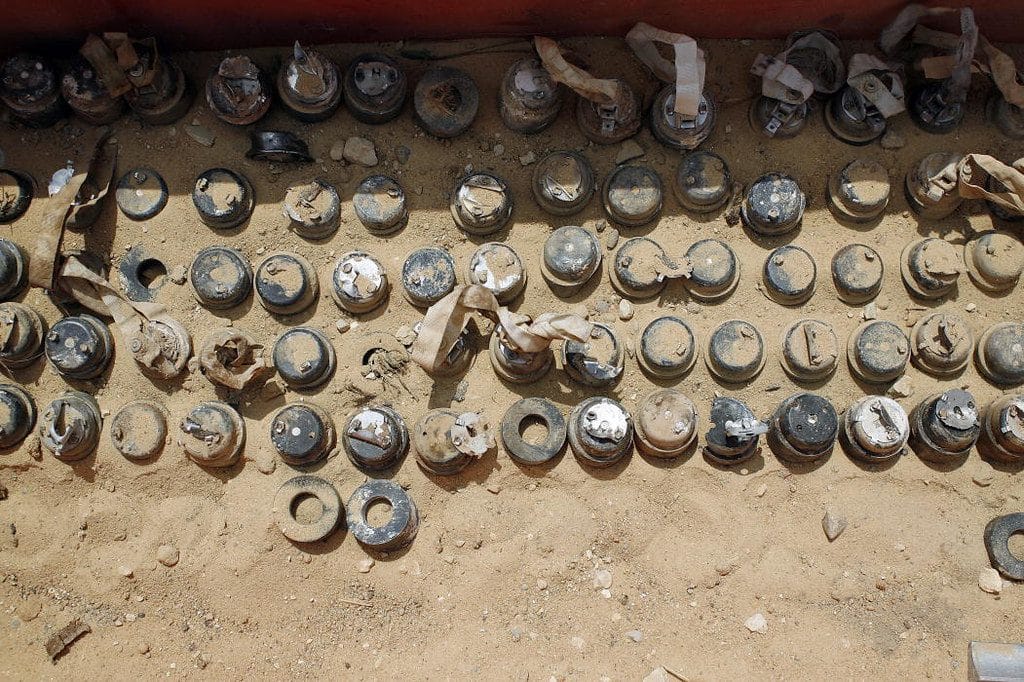
Across large parts of eastern and southern Ukraina, the war does not end when artillery falls silent. It remains buried underground — in anti-personnel mines, cluster munitions, unexploded rockets, and improvised traps left behind after retreating forces.
For Ukrainian emergency workers, deminers, and civilians returning home, the danger is constant. But for a growing number of international technology companies and humanitarian innovators, Ukraine has become something else as well: the world’s most important laboratory for the future of humanitarian demining.
From Japanese drone startups to European robotics firms and American AI developers, foreign teams are quietly arriving in Ukraine to study a problem that many believe will define post-war recovery for decades.
Yet while the need for innovation is enormous, so are the obstacles.
“No Simulation Can Recreate This”
At a destroyed position near the northeastern frontline, the ground tells multiple stories at once.
Burned armored vehicles lie half-covered in earth. Nearby fields that once produced wheat are considered unsafe to enter. Trees are shredded by shrapnel. Warning signs mark areas where explosives may still remain years after battles moved elsewhere.
For foreign engineers visiting Ukraine, the scale of contamination is difficult to comprehend until they see it themselves.
“Many companies develop solutions in controlled environments,” says one Ukrainian humanitarian specialist working with international partners. “But Ukraine is not a controlled environment. Terrain changes every season. Electronic interference changes. Soil changes. Weather changes. Warfare changes.”
According to Ukrainian officials and international organizations, vast territories remain potentially contaminated. Exact numbers fluctuate as frontlines move and new areas are surveyed, but the challenge is widely considered one of the largest demining operations in modern history.
For startups developing UAV mapping systems, underground radar technologies, AI-assisted detection, or autonomous clearance platforms, Ukraine offers something no testing facility can provide: reality.
“No simulation can fully recreate this,” says a European drone engineer who recently visited Kharkiv region for field observations. “The complexity is beyond anything we trained for.”
The New Race for Humanitarian Technology
In recent years, a new generation of companies has emerged at the intersection of robotics, AI, humanitarian work, and defense technology.
Some are experimenting with drones carrying synthetic aperture radar systems capable of identifying underground anomalies. Others are developing machine-learning software trained to recognize battlefield patterns from aerial imagery. Several projects combine thermal imaging, multispectral analysis, and autonomous navigation.
In Japan, one startup attracted attention for researching biosensor systems capable of detecting explosive materials. In Europe, engineers are building robotic platforms designed to reduce the need for humans to physically enter dangerous terrain. Ukrainian teams themselves are also developing increasingly sophisticated battlefield mapping tools born directly from wartime necessity.
Supporters of these technologies argue that traditional demining methods alone may be too slow for the scale of the problem Ukraine faces.
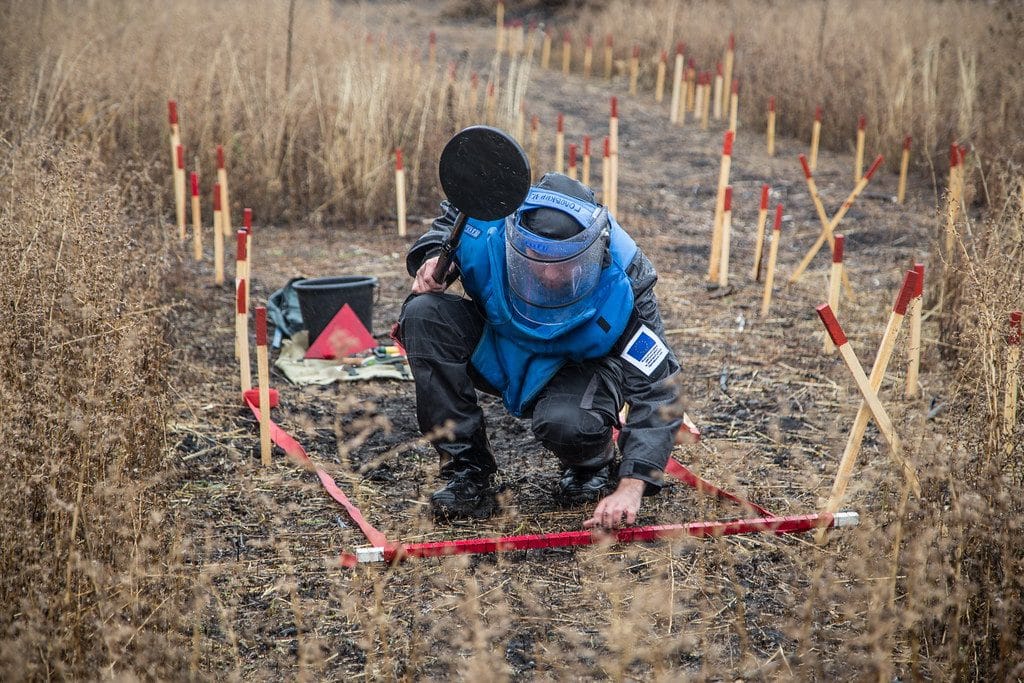
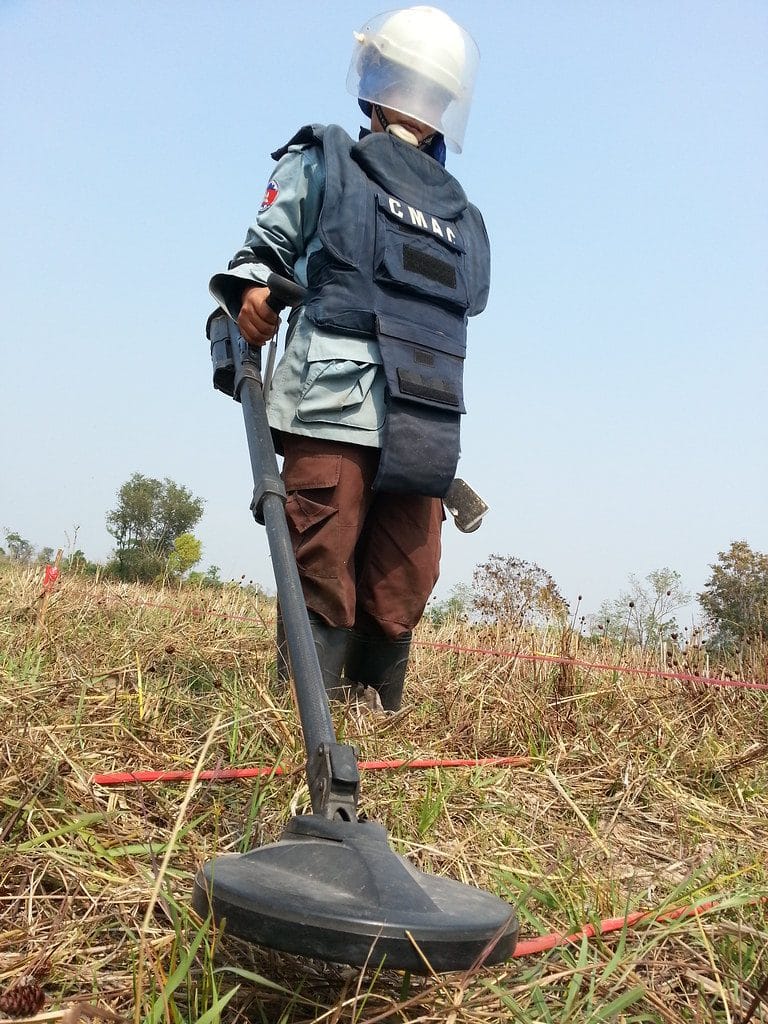
Humanitarian demining is notoriously dangerous, expensive, and time-consuming. In some areas, clearing a single hectare can take weeks or months.
Technology companies believe automation may accelerate that process.
But critics caution against unrealistic expectations.
“There is sometimes a Silicon Valley mindset entering humanitarian work,” says one international demining consultant. “People believe technology alone will solve everything. But mines are ultimately a human problem, not only a technical one.”
The Challenge of Entering Ukraine
For foreign startups, Ukraine presents both opportunity and risk.
The country offers unparalleled access to real-world conditions, experienced military engineers, and one of the most rapidly evolving defense ecosystems in Europe.
But operating there is far from simple.
Security restrictions remain significant. Many contaminated areas cannot be freely accessed. Cooperation with local authorities, military administrations, or humanitarian organizations is often essential. Insurance costs are high. Logistics are unpredictable. Air raid alerts can disrupt operations without warning.
Then there is the issue of trust.
Some Ukrainian specialists privately express frustration with foreign companies arriving with ambitious promises but little understanding of local realities.
“There are teams that come for presentations and photos,” says one Ukrainian volunteer involved in recovery operations. “But actual field work is much harder than investors imagine.”
Others worry that Ukraine could become a showcase environment where humanitarian language masks commercial interests.
Between Innovation and Ethics
The debate extends beyond technology.
As more foreign researchers, journalists, startup founders, and investors travel to Ukraine, questions about ethics inevitably follow.
For many Ukrainians, destroyed towns are not “field laboratories” but places where people were killed, displaced, or traumatized.
Some residents welcome international attention, arguing that global engagement helps attract resources and accelerates recovery.
Others fear the normalization of catastrophe.
“There is a fine line between documentation and exploitation,” says a Kyiv-based researcher studying post-war memory. “Ukraine needs international cooperation. But war should never become spectacle.”
This tension is particularly visible in places such as Bucza, Irpin, and parts of Kharkiv region, where scenes of destruction coexist with ordinary civilian life slowly returning.
Why Kharkiv Matters
For many international teams, Kharkiv has become one of the most important regions to observe.
Its proximity to the frontline means the realities of war remain immediate. At the same time, the city continues functioning — universities operate, businesses reopen, public transport runs, and reconstruction efforts continue despite ongoing attacks.
This coexistence of danger and resilience offers valuable insight for humanitarian planners and technology developers alike.
In surrounding areas, the contamination problem becomes even more apparent. Agricultural land, forests, damaged industrial facilities, and abandoned military positions create highly varied terrain conditions that challenge even advanced detection systems.
For engineers developing autonomous technologies, Ukraine’s environment exposes the limits of laboratory assumptions very quickly.
Dust interferes with sensors. Weather alters ground signatures. Metallic debris produces false positives. Terrain damaged by explosions complicates mapping algorithms.
In other words: reality resists simplification.
A Global Industry Shaped by War
Despite the risks and ethical complexities, few experts believe international interest in Ukraine will diminish.
On the contrary, many see the country becoming a long-term center for post-war innovation, humanitarian engineering, and reconstruction technologies.
What is being developed and tested in Ukraine today may eventually influence how the world responds to future conflicts, natural disasters, and contaminated environments elsewhere.
For some companies, entering Ukraine is a business decision.
For others, it is ideological.
And for many Ukrainians living with the consequences of war every day, the hope is simple: that the technologies emerging from this devastation may one day help prevent others from facing the same reality.
Understanding the Reality on the Ground
Wycieczki wojenne Ukraina works with journalists, researchers, documentary teams, humanitarian organizations, and international professionals seeking a deeper understanding of war-affected regions in Ukraine.
Field visits focus on context, safety, local realities, and responsible engagement with communities affected by the war.
Because in Ukraine, the story is no longer only about destruction.
It is also about what the world chooses to build afterward.